The Sights and Sounds of Olivia
Olivia has a distinctive sound - often described as "musical" or "warbling." The more tones, the more complex and melodic the sound. Listen to these real off-air recordings to learn what Olivia sounds like.
Olivia 500/16
500 Hz bandwidth, 16 tones - approximately 20 WPM
This is the most common Olivia format. Notice how the waterfall display shows "little puffs of cotton" layered against each other with gaps and holes visible. The sound is quite musical with 16 distinct tones creating a pleasant warbling pattern.
What to Listen For:
- Band noise for a few seconds at the start
- Beginning sync tones that mark the start of transmission
- The "musical" quality from 16 distinct tones
- Ending sync tones (may be edited out)

Olivia 500/8
500 Hz bandwidth, 8 tones - approximately 30 WPM
With half the tones of 500/16, this format is faster but less musical. The waterfall shows a less defined pattern with fewer gaps. The sound is more intense and "jumbled" compared to 500/16.
What to Listen For:
- Two stations having a QSO (conversation)
- Ending sync tones from first station
- Beginning sync tones from second station
- More intense, less melodic sound than 500/16
Olivia 500/4
500 Hz bandwidth, 4 tones - approximately 40 WPM
The fastest of the 500 Hz formats. With only 4 tones, the waterfall appears filled in fairly solid with minimal gaps. The sound is the most intense and least musical of the three.
What to Listen For:
- Signal starts weak, gets stronger
- Much more "dense" sound than 500/16 or 500/8
- Faster data rate means quicker text exchange
- Best used when signals are strong
Visual Pattern Comparison
These are real fldigi captures of "CQ CQ CQ de K6OZY K6OZY K6OZY" transmitted in each mode. Notice how fewer tones = faster transmission = shorter waterfall trace. Click any card to learn more about that mode.
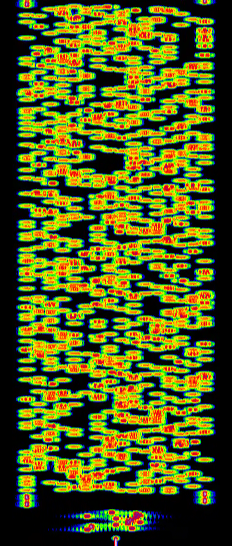
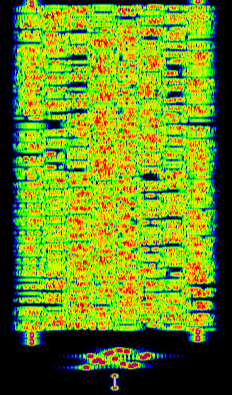
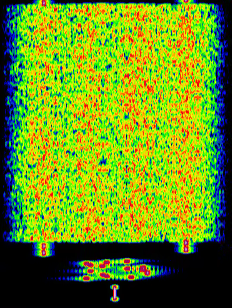
The varying heights visually demonstrate transmission time - the same message takes longer with more tones.
Understanding Sync Tones
Every Olivia transmission begins and ends with sync tones. These special tones help the receiving software:
1. Lock On
The sync tones tell your software "here comes Olivia data" so it can prepare to decode.
2. Synchronize
Your software aligns its timing with the transmitting station for accurate decoding.
3. Signal End
Ending sync tones mark the transmission complete, letting you know it's your turn.
This is why patience matters: The receiving station needs time to hear the sync tones, lock on, synchronize, and then see your decoded text (with some delay based on their Integration Period setting).